
⏱ 3 min read, 2 min video
Ready to spend more time outdoors? This 2-minute video featuring infectious disease specialist Dr. Mark Loeb explains the basics of Lyme disease and West Nile virus. Keep reading to learn about signs and symptoms, considerations for older adults, when to seek care, and ways to protect yourself.
View or download a transcript.
Lyme disease: What happens after a tick bite?
Lyme disease can develop after being bitten by an infected blacklegged tick (deer tick) or a western blacklegged tick. In most cases, a tick must be attached for at least 24 hours to transmit the bacteria that cause Lyme disease.
Figure 1: Blacklegged tick (deer tick) and western blacklegged tick
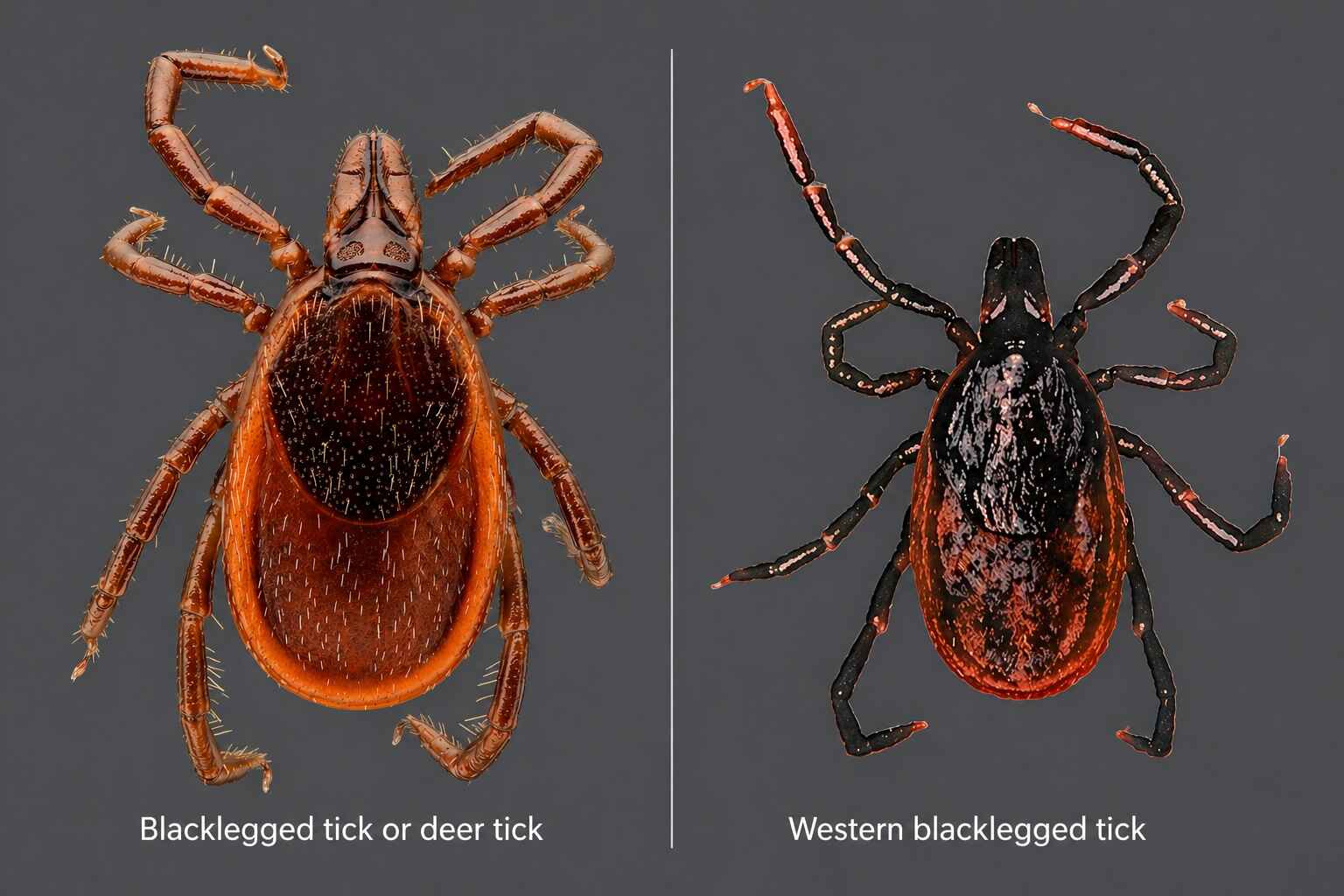
Blacklegged tick image courtesy of Institut national de santé publique du Québec. Western blacklegged tick image courtesy of British Columbia Centre for Disease Control
Source: Health Canada
Early symptoms of Lyme disease
Signs and symptoms of Lyme disease can vary from person to person. Symptoms can appear days to weeks after a bite and may include:
- An expanding skin rash over several days (often over 5 cm)
- Fever, chills, fatigue or headache
- Swollen lymph nodes
- Muscle and joint pain
These symptoms can sometimes be mistaken for other common conditions — especially in older adults.
Where an expanding rash develops, it typically begins at the site of the tick bite and may be circular or oval-shaped, resemble a target or bull’s eye, and may go unnoticed if on dark skin or on a part of the body that is difficult to see.
Figure 2: Typical Lyme disease rash in the pattern of a "bull's eye"
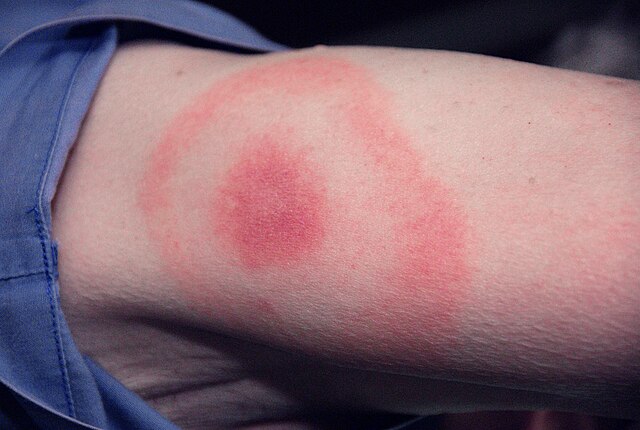
Image courtesy of the Centers for Disease Control and Prevention (CDC)
Source: CDC Public Health Image Library
Later Lyme symptoms (if untreated)
Later symptoms of Lyme disease can appear days to months after a tick bite and may include:
- Skin and general symptoms: more rashes, dizziness, and severe headaches
- Pain that moves or spreads: pain in the joints, bones, tendons, or muscles
- Joint problems: arthritis, especially in the knees, ankles, elbows, or wrists
- Thinking and memory changes: memory loss or trouble thinking clearly
- Nerve and muscle symptoms: nerve pain, weakness, tingling, numbness, or loss of sensation in the arms or legs
- Face, heart, eye, or neurological symptoms: drooping on one or both sides of the face, heart palpitations or an abnormal heartbeat, pink eye, or swelling affecting the brain and spinal cord
In very rare cases, serious heart complications can be life-threatening. If symptoms develop after a tick bite or possible tick exposure, seek medical care promptly.
When to seek care
Early diagnosis and treatment with antibiotics can prevent complications and improve recovery. See your healthcare provider right away if you’ve:
- Been bitten by a tick and develop symptoms, or
- Visited an area where blacklegged ticks or western blacklegged ticks may be found and have developed symptoms
Diagnosis of Lyme disease can be challenging as symptoms vary from person to person and can be mistaken for other common conditions, especially in older adults. In addition to assessing your signs and symptoms and your travel or exposure to areas where infected ticks may be found, your healthcare provider may order a blood test.
Visit Canada.ca to learn more about where ticks are found in Canada.
West Nile virus: What to watch for
West Nile virus is spread through the bite of an infected mosquito; other forms of transmission, such as blood transfusions, are very rare.
Symptoms of West Nile virus
Most people bitten by an infected mosquito do not develop symptoms. If symptoms do occur, they usually appear within 2 to 15 days after the infection and may include:
- Fever
- Headache
- Body aches
- Mild rash
- Swollen lymph nodes
Higher risk for adults 50+
Adults over 50 and others with underlying conditions or weakened immune systems are at higher risk of severe illness from West Nile virus. Serious symptoms (rare) can include:
- Brain and thinking symptoms: severe, rapid-onset headache, confusion, difficulty thinking clearly, drowsiness, or loss of consciousness
- Fever and infection symptoms: high fever, stiff neck, nausea and/or vomiting, difficulty swallowing
- Movement and muscle symptoms: muscle weakness, tremors, lack of coordination, or paralysis
When to seek care (West Nile)
Seek medical attention right away if you experience severe symptoms, especially neurological ones.
Mild cases typically improve in about a week, but more severe cases can lead to long-lasting health effects, sometimes lasting months or longer. In very rare cases, serious illness from West Nile virus can be fatal.
Diagnosis and treatment
A healthcare provider will diagnose West Nile virus based on:
- A person’s symptoms
- The geographic location they were in and the time of year when they were likely bitten
- Laboratory test results
While there is no specific treatment (or vaccine) for the infection itself, a person is treated to relieve their symptoms, including:
- Pain relievers to manage headache, fever, and muscle aches
- Hydration: either oral or intravenous fluids
- Rest
In severe cases, especially those with neurological symptoms, hospitalization is usually required.
Immunity
Most people who become infected with West Nile virus are believed to have lifelong immunity or protection from getting the disease again. However, some people with weakened immune systems from certain conditions or medications may not have a strong enough immune response to the initial infection or their immunity may wane over time.
How to reduce your risk
Spending time outdoors is part of a healthy lifestyle at any age. Taking a few simple precautions can help you stay well.
For ticks (Lyme disease):
- Wear long sleeves, pants and closed-toe shoes when in wooded or grassy areas
- Tuck your shirt into your pants, and your pants into your socks
- Use insect repellent (DEET or icaridin) on exposed skin and clothing (always follow product label directions)
- Consider wearing permethrin-treated clothing (always follow product label directions)
- Check your body, clothes and any outdoor gear after being outdoors
- Check your pets for ticks after they are outdoors, and talk to your vet about tick prevention
If you find a tick:
- Remove it as soon as possible
- Clean the area of the bite
- Watch for symptoms over the next few weeks
Learn more about how to remove a tick and spots that ticks can hide on your body from the Health Canada website.
For mosquitoes (West Nile):
- Use insect repellent with DEET or icaridin (always follow product label directions)
- Wear protective, light-coloured clothing: long pants and loose-fitting long sleeve shirts, socks and a hat (consider a mosquito net over your hat)
- Reduce standing water around your home
- Limit time outdoors at dawn and dusk
- Avoid direct handling of dead birds or animals
Tell us what you think
Give us your feedback on this content by answering a few questions. Your participation will help us improve this resource. Take the survey.
_jpg.jpg?sfvrsn=bcb0dd6_2)